

Written by Rashidat Olushola Okunlade
Former Vice President, Professor Yemi Osinbajo, has said Nigeria’s long-standing housing deficit can be effectively addressed if governments demonstrate the political will to unlock land and provide critical infrastructure through well-structured public–private partnerships (PPPs).
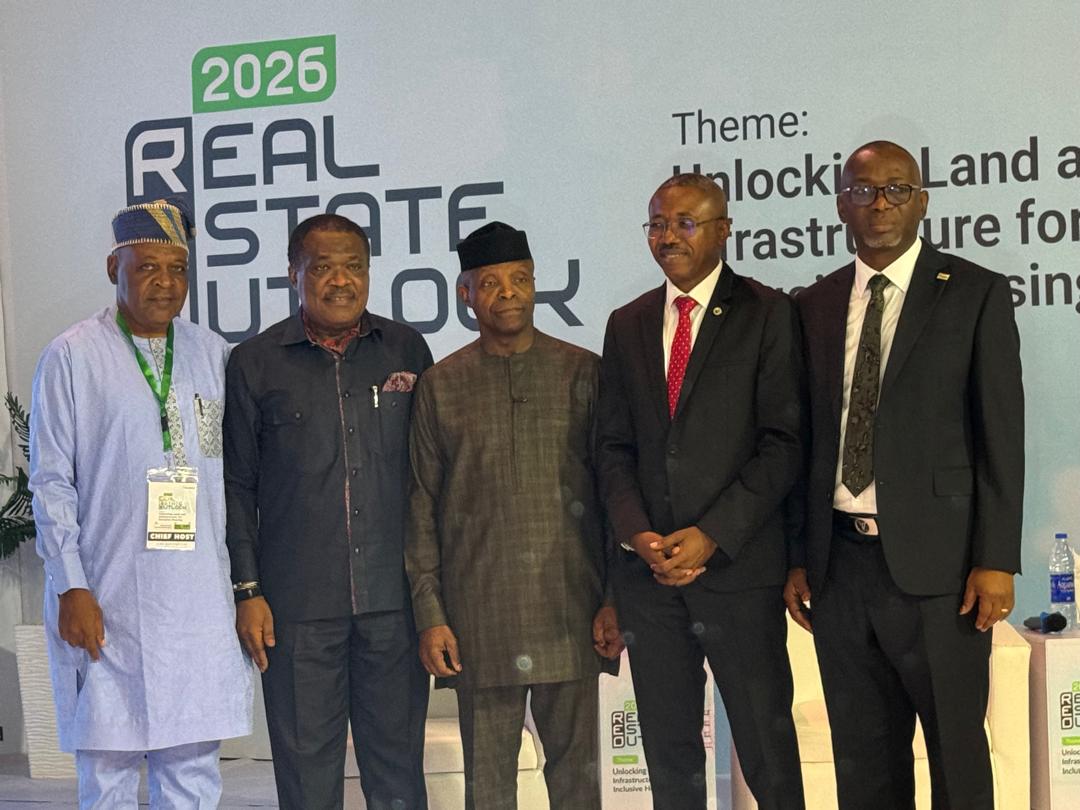
Osinbajo made the assertion on Tuesday in Lagos while delivering the keynote address at the Wemabod Real Estate Outlook Conference 2026, themed “From Bodija to the Future: Unlocking Land and Infrastructure for Inclusive Housing – A Regional Agenda.”
He described housing as “not merely a commodity, but the cornerstone of socio-economic transformation,” warning that inclusive housing would remain unattainable if land administration and infrastructure delivery were left solely to market forces.
“Housing is not simply a product for those who can afford it. It is the foundation of equity, collective prosperity and human dignity. If government does not intervene deliberately, inclusive housing simply cannot exist,” Osinbajo said.
Drawing lessons from the historic Bodija Housing Estate in Ibadan, the former Vice President explained that inclusive housing becomes achievable when land governance, planning and infrastructure provision are properly coordinated.
“Bodija was not just a housing project; it was a development strategy. Land was assembled, infrastructure was provided first, and housing followed. That model proved that affordability and social mix are possible when government leads with vision,” he noted.
Osinbajo, however, lamented that the challenge was not the failure of the Bodija model itself, but its poor replication across the South-West and the country at large. “The failure was not design; it was non-replication. If similar estates had been developed consistently across the region, we would today have networks of inclusive communities instead of fragmented, exclusionary developments,” he said.
He further argued that land scarcity in major South-West cities is largely institutional rather than physical, citing fragmented land ownership, slow titling processes and speculative land banking as major obstacles to affordable housing delivery. According to him, infrastructure deficits remain the single biggest cost driver in housing development.
“Infrastructure is the hidden subsidy of affordable housing. When households must provide their own water, roads, drainage and power, affordability collapses. Government controls land and can provide infrastructure. If the political will exists, states can deliver housing,” Osinbajo stated.
He advocated structured PPP models in which governments provide land and trunk infrastructure, while private developers bring capital and execution capacity, making mixed-income housing commercially viable and scalable.
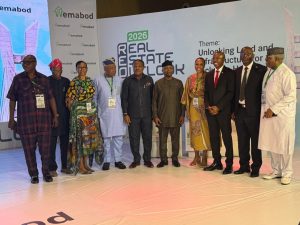

In his welcome address, Managing Director of Wemabod Limited, Bashir Oladunni, said inclusive housing could not be delivered by any single stakeholder. “Housing is not merely a social obligation; it is the foundation of economic productivity and social stability. Unlocking land and infrastructure is the pathway to scale, affordability and access,” Oladunni said.
He described Regional Development Commissions as critical institutional platforms capable of aggregating land, coordinating infrastructure and de-risking large-scale housing corridors. “When land is unlocked efficiently, infrastructure is planned deliberately and institutions collaborate effectively, inclusive housing in Nigeria is not only possible, it is inevitable,” he added.
Also speaking, Chairman of Wemabod Limited, Engineer Nureni Adisa, called for a shift from fragmented urban growth models to a coordinated regional development framework.
“Our cities face a paradox of growth alongside deepening inequality. Sustainable growth is impossible without inclusive housing, and inclusive housing is impossible without unlocking land and infrastructure through a regional agenda,” Adisa said.
He stressed that housing markets transcend state boundaries and urged inter-state collaboration in planning, land use and infrastructure development. “We must think and act regionally if we are to build connected, resilient and liveable communities,” he said.
Similarly, Group Chairman of Odu’a Investment Company Limited, Otunba Bimbo Ashiru, said the housing crisis requires coordinated policy action and institutional reform.
“Housing sits at the intersection of economic inclusion, urban productivity and social stability. Unlocking land, reforming land administration and delivering infrastructure are policy-driven challenges that demand strong public–private collaboration,” Ashiru stated.
The conference, which brought together policymakers, developers, financiers and urban development experts, concluded with a consensus that inclusive housing in Nigeria is achievable not as charity, but as a sustainable development strategy if governments lead with clear policies, land reform, infrastructure investment and credible private-sector partnerships.
In the same vein, Group Managing Director of Odu’a Investment Company Limited, Abdulrahman Yinusa, said real estate development must transcend commercial returns.
“Real estate must deliver lasting social and economic value. Aligning land administration, infrastructure investment and housing delivery is critical to achieving inclusive and productive urban growth,” Yinusa said.