

… Bank urges entrepreneurs to embrace structured models, tax compliance at Quarterly Business Forum
By Rashidat O. Okunlade | Lagos
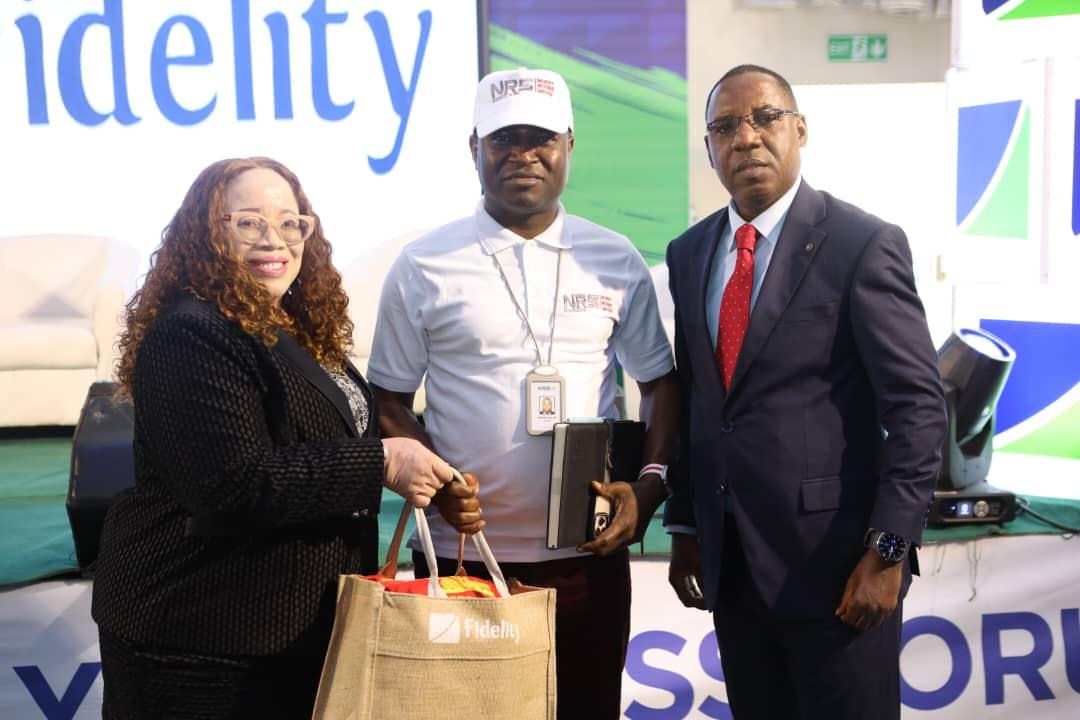
Leading financial institution, Fidelity Bank Plc, has called on Small and Medium-scale Enterprises (SMEs) to embrace digital solutions, maintain sound financial management practices and adopt structured business models to enhance competitiveness and drive sustainable growth.
The call was made at the Fidelity Bank SME Quarterly Business Forum held recently in Lagos, themed, “Build to Compete: Positioning Lagos Businesses for Sustainable Growth.”
The forum brought together entrepreneurs, business owners, industry experts and representatives of the Nigeria Revenue Service (NRS) to discuss practical strategies for strengthening SMEs through digital innovation, improved financial management, trade financing and regulatory compliance.
Navigating the Lagos Business Landscape
Speaking at the event, the Regional Bank Head, Ikeja, Fidelity Bank Plc, Mr. Jude Monye, who represented the Executive Director, Lagos and South-West, Dr. Ken Opara, described Lagos as a dynamic business hub with immense growth opportunities despite prevailing economic and operational challenges.
According to him, while Lagos remains one of Africa’s most vibrant commercial centres, entrepreneurs must navigate rising operating costs, intense competition, shifting consumer preferences, infrastructure limitations and working capital constraints.
“Yes, there are challenges, but that is why we are here, to see how we can guide you, support you and make sure that you bring your dreams to fruition. Building a competitive business in this environment requires more than ambition. It requires reliable products, consistent service, proper records, disciplined cost management, efficient inventory control and a deep understanding of customers,” Monye said.
The Role of Digital Tools
He further emphasised the role of technology in improving business performance and decision-making.
“Digital tools can support entrepreneurs’ business processes by providing them with clearer information on sales, inventory, expenses and profitability. A business owner who understands the true position of the business is better equipped to make the right decisions,” he stated.
Monye also underscored the importance of maintaining proper financial records and separating business finances from personal expenses, noting that these practices are critical to long-term sustainability and access to financing.
He reaffirmed Fidelity Bank’s commitment to supporting entrepreneurs with innovative banking solutions, capacity-building initiatives and access to capital.
SMEs as the Backbone of the Economy
In her remarks, the Divisional Head, SME Banking, Fidelity Bank Plc, Mrs. Ugochi Osinigwe, described SMEs as the backbone of Nigeria’s economy and highlighted the forum’s role as a platform for knowledge sharing, networking and business development.
“At Fidelity Bank, we are committed to helping entrepreneurs build, scale and transform their businesses into profitable and sustainable enterprises. Innovation and digital transformation are important parts of that journey, particularly in an increasingly competitive business environment,” she said.
Osinigwe encouraged participants from sectors including trade and distribution, manufacturing, maritime and logistics, technology, hospitality, financial services and the creative industry to leverage the bank’s financing solutions, advisory services and strategic partnerships to strengthen their operations and unlock new growth opportunities.

The Importance of Tax Compliance
Also speaking at the forum, the Head of Audit, Surulere Division, Nigeria Revenue Service (NRS), Dr. Ibrahim Olalere, stressed the importance of tax compliance and effective record-keeping in building sustainable businesses.
“Business owners must understand that tax compliance is an essential part of running a structured and sustainable enterprise. Maintaining accurate financial records and understanding their tax obligations will help SMEs operate more efficiently and avoid unnecessary compliance challenges,” he stated.
A Platform for Practical Growth
While commending Fidelity Bank for creating a platform that addresses the practical realities faced by entrepreneurs, the Managing Director/Chief Executive Officer of Emosh Foods, Mr. Oshiokpelua Osiga, also noted that sustainable business growth requires more than a great product.
“Growing a business requires more than having a good product. Entrepreneurs need access to the right information, financing and networks to scale sustainably. Forums like this provide valuable opportunities to learn, exchange experiences and identify solutions that can help businesses become more competitive,” he noted.
Now in its third edition, Fidelity Bank’s SME Quarterly Business Forum is rapidly evolving into a key part of the bank’s broader commitment to empowering entrepreneurs with the knowledge, tools and resources needed to grow sustainable enterprises and contribute meaningfully to Nigeria’s economic development.
What To Know About Fidelity Bank Plc
Ranked among the best banks in Nigeria, Fidelity Bank Plc is a full-fledged Commercial Deposit Money Bank serving over 10 million customers through digital banking channels, its 255 business offices in Nigeria and its United Kingdom subsidiary, FidBank UK Limited.
The Bank is a recipient of multiple local and international awards, including:
2025 Development Bank of Nigeria (DBN) Innovation Award for MSME support
Best Retail and SME Bank Award from Independent Newspapers
Best Bank for Export & Trade Finance and Most Innovative Bank of the Year at the 2025 BusinessDay Banks and Financial Institutions (BAFI) Awards
Nigeria’s Best Private Bank at the 2025 Euromoney Awards
Most Improved Commercial Bank of the Year (inaugural) by Nairametrics
SME Bank of the Year by NewsDirect
Straight-Through Processing (STP) Excellence Award by Citi Group
Recognition by Global Brands Magazine for Excellence in Community Empowerment
Why It Matters
Lagos is a notoriously unforgiving environment for small businesses. While the state remains the commercial nerve centre of Nigeria, SMEs here face a brutal trifecta of infrastructural deficits, volatile economic policies, and fierce competition. The failure rate for startups remains alarmingly high, often not due to a lack of innovative ideas, but because of poor financial management and a lack of scalability.
Fidelity Bank’s forum addresses a critical gap that financing alone cannot solve: the need for business acumen. By bringing in the Nigeria Revenue Service (NRS) to discuss tax compliance, the Bank is acknowledging a harsh reality, SMEs that do not formalize their record-keeping and tax obligations will eventually hit a ceiling. They cannot scale, they cannot access serious credit, and they remain vulnerable to regulatory fines.
Furthermore, the emphasis on digital adoption cannot be overstated. For many small business owners, “digital transformation” sounds like an expensive, abstract concept. However, as Mr. Monye pointed out, it is as simple as using tools to understand inventory, expenses, and profitability. Separating personal wallets from business accounts is the first step to survival.
The third edition of this forum demonstrates a sustained commitment by Fidelity Bank to do more than just sell loans. By positioning itself as a partner in capacity building, the Bank is investing in the longevity of its clientele. If Lagos SMEs can adopt these structured models, they will not only compete better locally but will also be positioned to access the multi-billion naira trade finance opportunities that the bank provides.
© ROTAMEDIANEWS Digital Newspaper and BusinessEcho Magazine By ROTA Media Concepts
For advert placement, news tips and subscription enquiries, contact the Publisher/Editor-in-Chief, Rashidat Olushola Okunlade.
rotamedianews@gmail.com businessechomag@gmail.com
08082881578-08060585197



