


… Stakeholders call for stronger financing, digital payments and policy alignment to unlock intra-African trade and AfCFTA opportunities
R. Olushola Okunlade Writes
Policymakers, financiers and global business leaders convened in Cape Town, South Africa, for the Africa Trade Conference (ATC) 2026, where discussions centred on one of the continent’s most pressing economic challenges — Africa’s persistent trade financing gap.
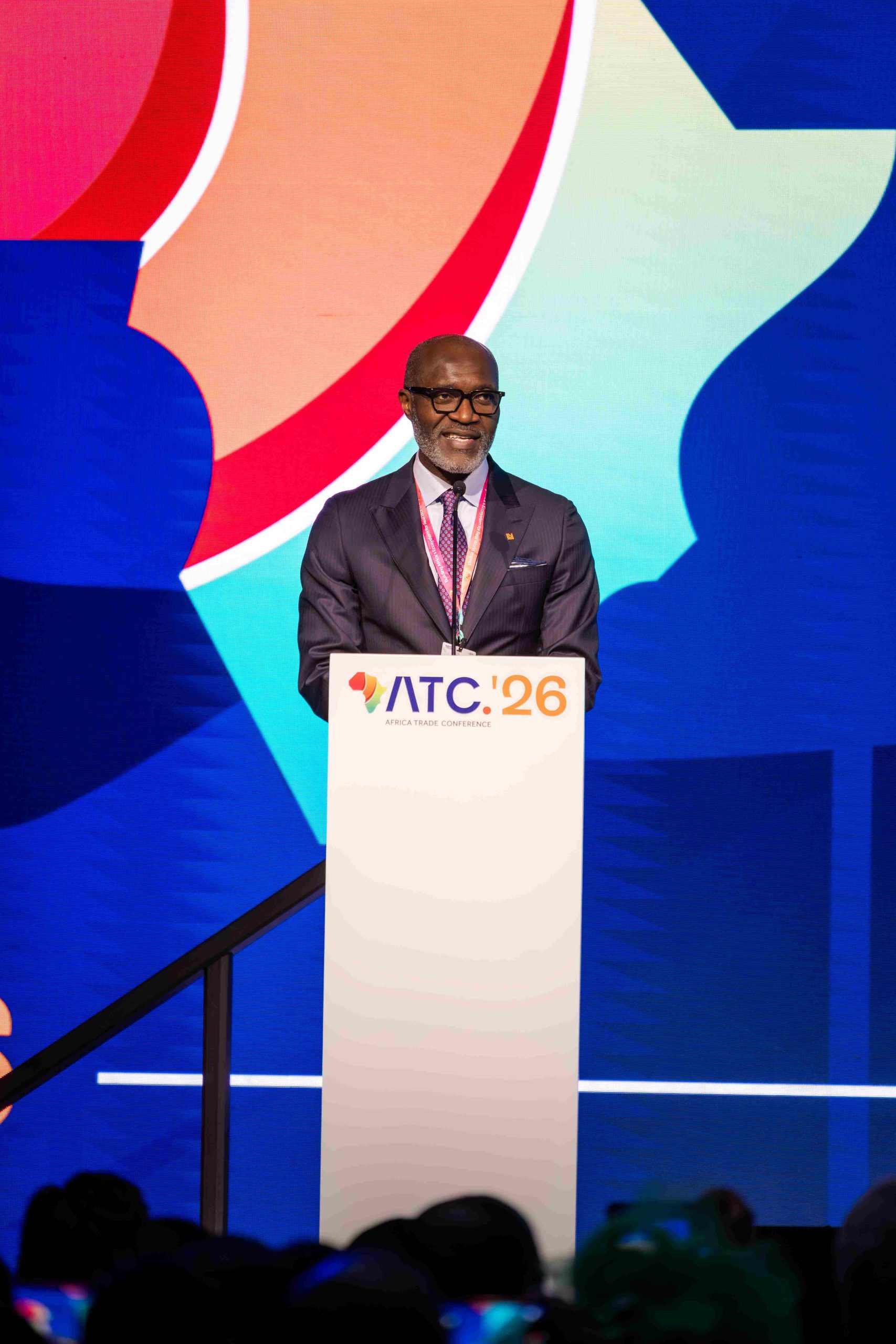
Hosted by Access Bank Plc, the conference brought together government representatives, development finance institutions and private sector stakeholders to explore strategies for transforming Africa’s fragmented trade ecosystem and unlocking the full potential of the African Continental Free Trade Area (AfCFTA).
A dominant theme that emerged from the high-level engagements was the urgent need for Africa to transition from a continent defined by landlocked markets to a network of land-linked economies connected through finance, infrastructure and digital trade systems.
Translating Policy Vision into Business Impact
The conference, themed “Turning Vision into Velocity: Building Africa’s Trade Ecosystem for Real-World Impact,” focused on practical solutions that can help businesses expand across borders and participate more effectively in regional and global markets.
In his welcome address, Roosevelt Ogbonna, Managing Director and Chief Executive Officer of Access Bank Plc, emphasised the need to dismantle structural barriers that continue to limit intra-African commerce.
He noted that Africa still accounts for a relatively small share of global trade, with trade corridors across the continent remaining fragmented and insufficiently functional. According to him, many small and medium-scale enterprises with cross-border ambitions remain constrained by limited access to finance and weak logistics systems.
Ogbonna explained that the conference builds on discussions initiated during its inaugural edition in 2025, with renewed emphasis on expanding intra-continental trade while strengthening Africa’s participation in global value chains.
He stressed that the gathering must move beyond dialogue to become a catalyst for real transformation, capable of driving meaningful growth in intra-African trade.
For Access Bank, he added, the role of financial institutions is evolving beyond traditional lending to include connecting markets, ideas and investment opportunities that enable African businesses to move from ambition to measurable impact.
Bridging Africa’s Trade Finance Gap
Despite its vast natural resources and population exceeding 1.3 billion people, Africa remains underrepresented in global trade flows. Limited access to financing continues to be one of the biggest barriers facing exporters, manufacturers and small businesses seeking cross-border expansion.
To address this challenge, Ogbonna outlined three strategic priorities identified from previous conference engagements: fostering collaboration among policymakers, financial institutions and businesses; building trade ecosystems powered by reliable data and analytics; and developing inclusive financial systems that support both multinational corporations and small enterprises.
He noted encouraging signs of progress, including the emergence of regional value chains across agriculture, manufacturing and services, as well as the growing global visibility of African brands. However, he cautioned that such gains remain uneven, with growth concentrated in a limited number of markets and trade corridors.
Mobilising Capital to Finance Africa’s Trade Future
Discussions at the conference also focused on the evolving financial architecture required to unlock Africa’s full trade potential.
Keynote speakers included Kennedy Mbekeani, Director General for the Southern Africa Region at the African Development Bank, and Kwabena Ayirebi, Managing Director of Banking Operations at the African Export-Import Bank.
Both speakers emphasised the importance of collaboration among development finance institutions, commercial banks and governments to mobilise the capital required for infrastructure development and sustainable trade expansion.
Mbekeani highlighted that attracting private sector investment will be critical in bridging Africa’s infrastructure financing deficit, particularly as many governments face fiscal constraints and rising debt pressures.
Digital Payments and Trade Integration
The conference also examined the role of digital infrastructure in enabling seamless cross-border trade.
Mike Ogbalu, Chief Executive Officer of the Pan-African Payment and Settlement System, underscored the importance of payment interoperability in reducing the cost and complexity of cross-border transactions, especially for small and medium-sized enterprises.
He noted that efficient payment systems are essential to improving trade efficiency and accelerating economic integration across African markets.
Further insights were provided by Tolu Oyekan, Managing Director and Partner at Boston Consulting Group, who presented the Africa Trade Outlook 2026. His analysis highlighted key macroeconomic trends shaping the future of African trade, including shifting global supply chains, the growing importance of regional value chains and emerging opportunities for African industries to capture greater value in global markets.
Policy Alignment and Strategic Partnerships
A high-level ministerial panel featuring Elizabeth Ofosu Adjare, Ghana’s Minister for Trade, Agribusiness and Industry, and Tiroeaone Ntsima, Botswana’s Minister of Trade and Entrepreneurship, explored policy frameworks needed to accelerate Africa’s economic integration.
Participants agreed that regulatory alignment, infrastructure investment and innovative financing mechanisms are crucial to fast-tracking the implementation of AfCFTA and unlocking intra-African trade opportunities.
Reimagining Africa’s Economic Geography
Beyond financing and policy discussions, the conference reflected a broader shift in how Africa’s economic future is being conceptualised. Rather than viewing landlocked economies and fragmented markets as permanent constraints, stakeholders highlighted the transformative potential of integrated banking networks, digital payment systems and trade finance platforms in connecting isolated markets into vibrant trade corridors.
With operations spanning 25 countries globally — including 16 across Africa — Access Bank is positioning itself to build financial corridors that link African businesses to each other and to global markets.
From Economic Potential to Global Participation
Deliberations at the Africa Trade Conference reinforced a growing consensus that Africa’s economic transformation will depend on coordinated policy reforms and strong institutions capable of financing and facilitating trade.
Banks, development finance institutions and payment platforms are increasingly becoming the connective tissue linking African markets.
For Access Bank, the ambition is clear: to help reshape the narrative of African trade — from isolated markets to integrated corridors, from landlocked constraints to land-linked opportunities, and from untapped economic potential to meaningful participation in the global trading system.