
… Says Reforms Have Positioned Nigeria for New Energy Investment
Written By Rashidat O. Okunlade | Lagos
The Nigerian National Petroleum Company Limited (NNPC Limited) says reforms in Nigeria’s oil and gas sector have added 600,000 barrels per day (bpd), raising national crude oil production from about 1.2 million bpd to 1.8 million bpd and placing the country in a stronger position to attract international energy capital.
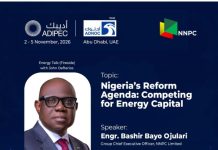
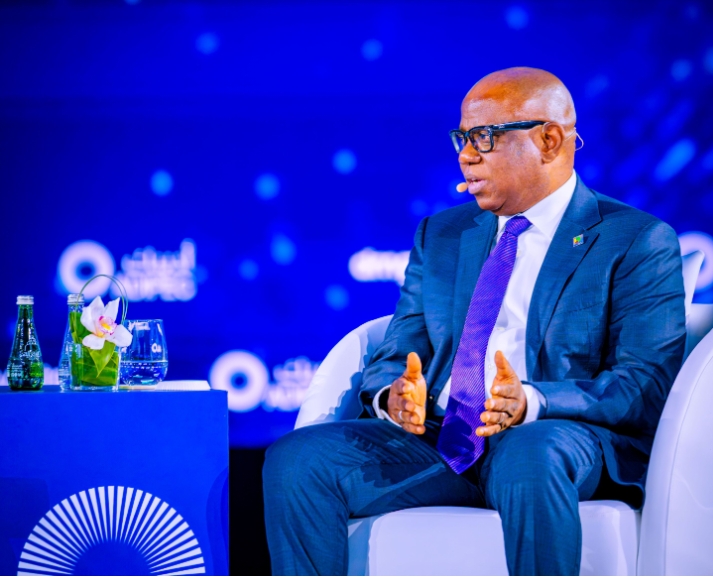
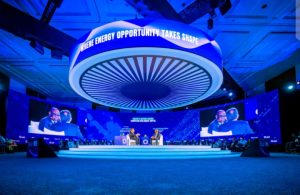
Group Chief Executive Officer of NNPC Limited, Engr. Bashir Bayo Ojulari, disclosed this on Tuesday while speaking at an Energy Talk titled “Nigeria’s Reform Agenda: Competing for Energy Capital,” moderated by John Defterios, Chairman, MENA, APCO, at the 2026 Abu Dhabi International Petroleum Exhibition and Conference (ADIPEC) in Abu Dhabi, UAE.
Ojulari attributed the output growth to the implementation of the Petroleum Industry Act (PIA, 2021), an improved investment climate, better investment decisions, and closer collaboration between NNPC Limited and its partners.
Targeting 2 Million bpd by 2027
He said the Company is now working towards the 2 million barrels per day ambition by 2027 by maintaining existing infrastructure, protecting base production, increasing output from producing assets, and advancing new projects scheduled to raise production.
“The figure of 1.8 million barrels per day is a stage in a journey towards our objective. We are concentrating on the basics, which are maintaining our infrastructure, protecting base operations and executing the projects that will take production higher,” Ojulari stated.
Domestic Gas and CNG Expansion
On the domestic market, the GCEO said the removal of the petrol subsidy has been accompanied by a major compressed natural gas (CNG) programme, with over 400 CNG conversion centres established and more than 1,000 trucks that move petroleum products now running on CNG.
He added that the Obiafu-Obrikom-Oben (OB3) gas pipeline was completed in August 2026, while the Ajaokuta-Kaduna-Kano (AKK) pipeline is expected to deliver gas to Abuja before the end of the year for power generation, data centres, and industrial hubs.
Track Record of Execution
Ojulari said NNPC Limited’s Board and management are working hard to meet the Company’s projections as set out in the mandate given to it by President Bola Ahmed Tinubu, GCFR.
He explained that a baseline assessment of the company’s asset base and infrastructure has given management a full understanding of its portfolio, including its strengths and the areas requiring improvement.
“Our track record will be judged by what is done and not by what is said,” he stated.
Regional Gas Supply and International Interest
Turning to regional gas supply, the GCEO noted that all the countries involved in the Nigeria-Morocco Gas Pipeline have aligned and executed the necessary agreements, and that Nigeria, Algeria, and Niger have aligned on the development of the Trans-Saharan Gas Pipeline.
Ojulari stated that NNPC Limited is targeting national gas production of 10 billion standard cubic feet per day (Bcf/d) by 2027 and 12 Bcf/d by 2030, supported by the development of domestic and export markets for Nigerian gas.
On international interest in Nigeria, the GCEO cited major projects including TotalEnergies’ Ubeta, Shell’s Bonga South-West, and Eni’s Zabazaba developments, noting that commercial agreements covering about US$20 billion in investment have been concluded.
He added that NNPC Limited is building new relationships with partners, including ADNOC and Chinese investors in Nigeria’s refineries, and is working with global service companies to expand service capacity in the country.
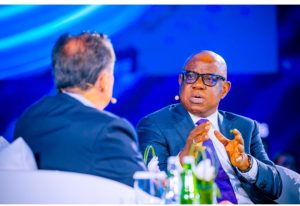
Ojulari reaffirmed the company’s commitment to execution excellence and transparency, citing two consecutive earnings calls held by NNPC Limited.
Why It Matters
The announcement that Nigeria’s crude oil production has climbed from 1.2 million bpd to 1.8 million bpd is arguably the most consequential economic news the country has received in recent years. For a nation heavily reliant on oil revenues to fund its national budget, an additional 600,000 bpd translates to billions of dollars in much-needed foreign exchange earnings, providing a critical lifeline for an economy grappling with inflation and currency volatility.
Engr. Ojulari’s attribution of this growth to the Petroleum Industry Act (PIA) validates the long and often painful legislative journey to reform Nigeria’s oil sector. The PIA was designed to provide the fiscal certainty and regulatory clarity that international oil companies (IOCs) had long demanded. The results including the Final Investment Decisions (FIDs) on major projects and the conclusion of commercial agreements worth $20 billion suggest that investor confidence is finally returning.
However, the GCEO’s acknowledgment that “our track record will be judged by what is done and not by what is said” is a crucial caveat. Nigeria has a history of announcing ambitious targets that are later derailed by security challenges, infrastructure sabotage, or policy inconsistencies.
Sustaining 1.8 million bpd and reaching the 2 million bpd target by 2027 will require more than just signing agreements; it will require an aggressive crackdown on oil theft, the completion of critical infrastructure like the AKK pipeline, and a steadfast commitment to the rule of law in the Niger Delta.
Furthermore, the emphasis on gas targeting 12 Bcf/d by 2030 signals a strategic pivot. As the world transitions away from fossil fuels, gas represents Nigeria’s best opportunity to remain relevant in the global energy market while simultaneously solving its domestic power crises. If NNPC can successfully deliver gas to power generation plants and industrial hubs, it could catalyze the industrialization that Nigeria has long sought.
The global stage of ADIPEC was the perfect venue for this message. Now, the world will be watching to see if Nigeria can turn its reform rhetoric into sustained, tangible output.
© ROTAMEDIANEWS Digital Newspaper & BusinessEcho Magazine by ROTA Media Concepts
For advert placement, news tips and subscription enquiries, contact the Publisher/Editor-in-Chief, Rashidat Olushola Okunlade.
rotamedianews@gmail.com businessechomag@gmail.com
08082881578-08060575197