

By Toba Alabi (tobalabi@yahoo.com)
Introduction
The Nigerian economy, a product of its long-standing reliance on the petroleum industry, stands at a crossroads. Over the years, the debate surrounding deregulation and subsidy removal in the oil sector has been rife with emotional narratives, subjective arguments, and misguided expectations of immediate economic miracles. Yet, the complexities of a capitalist economy, governed by price mechanisms and the forces of demand and supply, remain unaffected by sentiments. At the heart of this debate lies the Dangote Refinery, a significant private-sector initiative poised to alter the dynamics of fuel pricing in Nigeria, but one that is not immune to the contradictions plaguing the oil sector.
Price Mechanism
The price mechanism refers to the process by which the forces of supply and demand interact in a market economy to determine the prices of goods and services. In this system, prices rise or fall based on the availability (supply) of a product and the desire (demand) for it. When demand exceeds supply, prices increase, signaling producers to produce more, while high prices can discourage consumption. Conversely, when supply exceeds demand, prices drop, encouraging more consumption and reducing production. This self-regulating process allocates resources efficiently, with minimal need for government intervention. (Samuelson, 1948)
The Fragility of the Nigerian Economy
Nigeria’s economic fundamentals remain alarmingly weak, primarily due to an overdependence on oil revenues. Despite the abundant natural resources, the country has struggled to diversify its economy, with the non-oil sectors contributing minimally to GDP growth. As such, any shift in the oil sector has far-reaching implications for the nation’s fiscal health and the standard of living for its citizens.
The removal of subsidies on petroleum products has long been viewed as a necessary reform, particularly by economists who argue that subsidies distort market realities, encourage inefficiency, and drain the national treasury. The Nigerian government has spent billions of dollars over the years to artificially lower fuel prices, but with limited fiscal space, this approach has proven unsustainable.
Yet, the idea of subsidy removal has been met with widespread resistance from a populace accustomed to low fuel prices, even as the costs of sustaining those subsidies continue to mount. This tension is indicative of a larger problem—the structural weaknesses in the Nigerian economy. These include inadequate infrastructure, low productivity in key sectors, and a lack of competitive industries outside of oil. Expecting an economic miracle without addressing these issues is simply unrealistic. (CBN, 2022).
Dangote Refinery: An Economic Game Changer or Another Monopoly?
The Dangote Refinery, a $20 billion investment, has been heralded as a game changer for Nigeria’s downstream oil sector. Set to be one of the largest refineries in the world, it holds the promise of reducing the country’s dependence on imported refined petroleum products, which has long contributed to Nigeria’s trade imbalance and foreign exchange volatility.
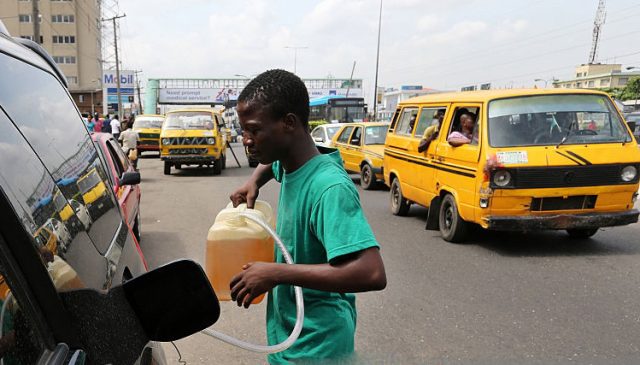
However, recent reports indicate that the average cost of a litre of fuel from the Dangote Refinery may hover around N950. This figure has sparked significant debate, with some questioning the affordability of such prices in a country where the majority of the population lives below the poverty line. However, expecting Dangote to be a “Father Christmas,” providing fuel at artificially low prices, ignores the economic realities of the capitalist system. With the substantial investment made, Dangote’s primary goal, like any investor in a capitalist economy, is to ensure profitability.
A refinery of this magnitude is expected to operate based on market-driven pricing. The cost of production, crude oil prices, and other operational expenses will dictate the price at which the fuel is sold. While some may argue that this price is exorbitant, it is important to recognize that price fixing by the government or any attempts to regulate prices in such a scenario would undermine the very principles of deregulation and market efficiency.
Deregulation and the Market Mechanism
Deregulation of the petroleum sector, which involves allowing market forces to determine prices, is fundamentally tied to the workings of a capitalist economy. In theory, deregulation should encourage competition, increase efficiency, and ultimately drive prices down. However, for this to happen, there must be multiple players in the market. The current situation, where Dangote Refinery dominates the landscape, raises concerns about potential price-fixing or monopolistic practices.
A monopoly, even a privately-owned one, could undermine the benefits of deregulation. If the Dangote Refinery becomes the sole supplier of refined petroleum products, the absence of competition may allow the company to set prices at levels that maximize its profits, to the detriment of consumers. While the government may not directly intervene in price-setting, it has a responsibility to ensure that a competitive market structure is in place, where multiple refineries can operate and provide price options for consumers.
Dangers of Monopoly and Oligopoly
Monopoly and oligopoly pose significant dangers to a market economy by limiting competition, which can lead to inefficiencies and harm consumers. In a monopoly, where a single company controls the market, the lack of competition allows the monopolist to set prices higher than in a competitive market, reducing consumer welfare and potentially lowering product quality. In an oligopoly, where a small number of firms dominate, there is a risk of collusion, where companies coordinate to fix prices, restrict output, or divide markets, leading to similar negative outcomes. Both market structures stifle innovation, as firms face little to no pressure to improve their products or services. Additionally, they can create barriers to entry for new firms, further entrenching the power of dominant companies and reducing market dynamism. (Lipsey, R. G., & Steiner, P. O. (1972)
Breaking the Monopoly of the Dangote Refinery
To break the monopoly of Dangote Refinery, it is essential that Nigeria’s four state-owned refineries—two in Port Harcourt, one in Warri, and one in Kaduna—become fully operational. Revamping these refineries would increase domestic fuel production capacity, reduce reliance on a single supplier, and foster competition in the oil market, leading to more stable fuel prices. Furthermore, restoring these refineries would create jobs, boost the local economy, and strengthen Nigeria’s energy security by decreasing dependence on imported fuel or foreign-owned refineries. This move is crucial for ensuring a balanced and competitive oil sector.
Current Pricing Regime
The Nigerian National Petroleum Company (NNPC) has released updated Premium Motor Spirit (PMS) prices for September 2024, highlighting significant regional variations due to transportation and distribution costs. Borno State faces the highest price at N1,019.22 per liter, while Lagos will pay the lowest at N950.22 per liter. The pricing is based on international rates and Dangote Refinery’s gantry price, with additional fees factored in. These prices are negotiated, not government-set, under the Petroleum Industry Act (PIA). Payments to Dangote Refinery are currently made in U.S. dollars, but local naira-based transactions are expected from October 2024. NNPC hopes for a discount from Dangote, which would be passed on to consumers.
Fixing the Contradictions in Nigeria’s Oil Sector
The contradictions in the Nigerian oil sector are deep-seated, and until they are addressed, the economy will continue to be in the doldrums. The inefficiencies in the Nigerian National Petroleum Corporation (NNPC), the high level of corruption in fuel importation, and the failure to develop domestic refining capacity over the decades have left the country vulnerable to external shocks and fuel price volatility.
The government’s push for deregulation must be complemented by policies that encourage investment in the downstream sector, creating an environment where multiple refineries, both public and private, can thrive. Additionally, there must be a concerted effort to address the infrastructure deficits, such as poor transportation networks and inadequate electricity supply, which contribute to the high cost of production and distribution.
Moreover, the removal of subsidies should be coupled with targeted social programs to cushion the impact on the most vulnerable segments of the population. Fuel price increases have a direct effect on the cost of living, particularly for those already struggling to make ends meet. Without proper planning and support, deregulation could deepen poverty and social unrest.
Conclusion: Charting a Path Forward
The challenges facing Nigeria’s petroleum sector are emblematic of the broader issues afflicting the national economy. Deregulation, while necessary, is not a panacea. It must be accompanied by a comprehensive strategy to reform the oil sector, diversify the economy, and foster competition. The Dangote Refinery, as a monumental project, offers hope for reducing dependence on fuel imports, but its dominance in the market must be carefully managed to avoid monopolistic tendencies.
Ultimately, Nigeria must embrace the realities of a capitalist economy where prices are determined by demand and supply, not emotions or government interventions. However, this transition must be managed with care, ensuring that the benefits of deregulation are shared equitably and that the contradictions that have long stifled the oil sector are finally addressed. Only then can Nigeria begin to emerge from its economic malaise and chart a path toward sustainable development.
References: International Energy Agency (IEA). (2021). Energy Policy Review: Nigeria 2021. International Energy Agency. Central Bank of Nigeria (CBN). (2022). Economic Report 2022. Central Bank of Nigeria. Lipsey, R. G., & Steiner, P. O. (1972) Positive Economics. Weidenfeld & Nicolson. Samuelson, P. (1948). Economics: An Introductory Analysis McGraw-Hill.
Toba Alabi is Professor of Political Science and Defence Studies. (08036787582)
Written on 19 September, 2024



