
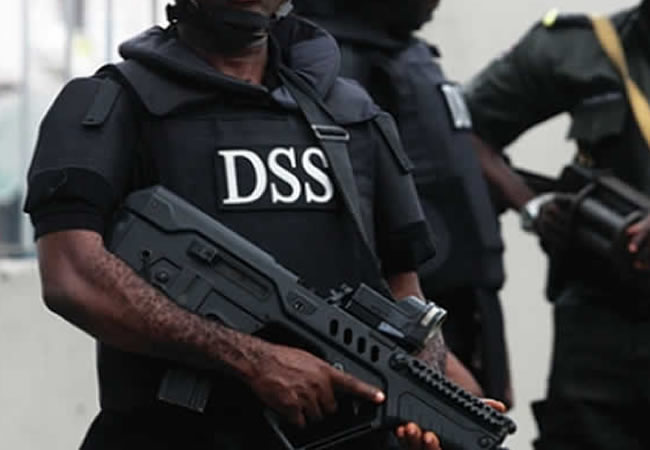

DSS’ Silent War; How Intelligence-Led Operations Are Reshaping Nigeria’s Security Landscape
Written By Rashidat O. Okunlade | Lagos
For years, the Department of State Services (DSS) operated largely in the shadows, its reputation defined more by controversy than by measurable security outcomes. Allegations of arbitrary detentions, political interference, and human rights abuses often overshadowed the agency’s core mandate of protecting Nigeria’s internal security.
But beneath the surface of public scepticism, a quiet transformation has been underway. Since assuming leadership in 2024, Director-General Adeola Oluwatosin Ajayi has overseen a strategic shift from reactive crisis management to proactive, intelligence-led operations. The results, while often unseen by the public, are beginning to speak for themselves.
The New Strategy: Beyond Kinetics
At the heart of the DSS’s repositioning is a fundamental recognition: defeating terrorism, banditry, and kidnapping requires more than military force. It demands precision intelligence, inter-agency coordination, and the systematic dismantling of criminal networks from the inside out.
Intelligence Fusion and Joint Operations
The DSS has significantly enhanced its collaboration with other security agencies, including the Armed Forces, the Nigeria Police Force, and allied intelligence institutions. This has resulted in improved real-time information sharing and more effective operational responses across multiple security theatres.
Between January and June 2026 alone, the DSS rescued more than 200 kidnapped victims through joint operations, dismantled arms trafficking networks, disrupted terrorist activities in several states, and foiled an attempted hijack of a crude oil vessel in the Gulf of Guinea.
Decapitating Terror Networks
Perhaps the most dramatic demonstration of the new approach has been the systematic targeting of high-value terrorist commanders. In August 2025, operatives captured Mahmud Muhammad Usman, the self-proclaimed Emir of Ansaru and one of Nigeria’s most wanted terror figures, alongside Mahmud al-Nigeri, his Chief of Staff. Around the same period, DSS operatives arrested Abubakar Abba, leader of the Mahmuda group, a Boko Haram faction responsible for terrorising communities across Kwara and Kogi States.
Three months later, Ansaru commander Abdulazeez Obadaki was recaptured after a 13-year manhunt, closing the book on a man accused of masterminding the 2012 massacre of worshippers at Deeper Life Bible Church near Okene, Kogi State. The Embassy of the United States described these operations as a major step in the fight against terrorism.
The strategy is simple but effective: remove the commanders, and you collapse the hierarchy.
Cutting the Supply Lines
Armed groups do not sustain themselves on ideology alone. They need weapons, ammunition, and supply networks. The DSS has been systematically targeting those pipelines with notable success.
In January 2026, notorious arms smuggler Abubakar Umar (Dangada) was intercepted in Zamfara with a large cache of weapons smuggled from Niger Republic. In May 2026, a joint operation on the Asaba-Onitsha expressway intercepted a truck carrying over 164,000 live cartridges allegedly bound for IPOB/ESN networks. In April 2026, operatives apprehended 25-year-old Nafisa Usman at a motor park in Kano while she was allegedly transporting 200 rounds of ammunition from Lafia in Nasarawa State to Kankara in Katsina, a known bandit corridor.
These hauls, spanning motor parks, border routes, and highways, reveal a DSS reaching into every layer of the supply chain.
Financial Warfare
Dismantling terror networks requires cutting off the financial oxygen that keeps them alive. In April 2026, the Federal Government, through the Nigeria Sanctions Committee chaired by the Attorney-General of the Federation, published an updated list of 48 individuals and 12 corporate entities designated as terrorism financiers. An immediate directive followed to freeze all associated accounts and assets.
The DSS has also become a key defender of Nigeria’s financial integrity. Through intelligence-led operations and deep collaboration with banks, the Service has been curtailing multi-billion-naira cyber fraud, particularly in Lagos and Abuja. It monitors cryptocurrency channels, dark web chatter, and high-risk digital wallets used by fraud syndicates to launder stolen funds.
In 2024, the DSS secured court orders to freeze 12 bank accounts linked to two Abuja-based businessmen over allegations of advance-fee fraud and terrorism financing. That same year, DSS operatives in Lagos uncovered a scheme that diverted N1.426 billion from Fouani Nigeria Limited’s Access Bank account into multiple accounts across several banks.
From Arrests to Convictions: The Judicial Front
Security experts have long argued that defeating terrorism requires more than neutralising fighters on the battlefield. It requires ensuring that perpetrators are held accountable through the judicial process. The DSS appears to have embraced this principle.
Recent courtroom victories represent an important evolution in Nigeria’s counterterrorism architecture. Within a span of weeks, Nigerian courts delivered landmark judgments in cases investigated and prosecuted by the DSS.
Owo Church Attack: Four terrorists involved in the June 2022 attack on St. Francis Catholic Church in Owo, Ondo State, one of the deadliest terrorist incidents in recent Nigerian history received death sentences. The DSS is also prosecuting additional suspects linked to the attack, including Sani Yusuf, who eluded arrest for nearly four years before being captured in February 2026.
UN Building Bombing: The DSS is diligently prosecuting Khalid Al Barnawi and four others suspected of carrying out the August 2011 bombing of the United Nations building in Abuja, which killed over 20 people from different countries.
Arms Trafficking: Halima Haliru Umar pleaded guilty before a Federal High Court in Abuja to illegally possessing 302 rounds of live ammunition she had couriered to a bandit leader and received a 20-year prison sentence. A Chief Magistrate Court in Taraba sentenced three other arms traffickers arrested by the DSS to 10 years in prison without the option of fine.
Mass Killings: Following the Yelwata killings in Benue State in June 2025, which claimed at least 150 lives, the DSS moved with urgency. Within 11 days, 26 suspects were arrested, and by August 2025, the DSS had filed terrorism charges against nine suspects. Similarly, after the Palm Sunday attack in Angwa Rukuba, Plateau State, in March 2026, the DSS arrested suspects within a week, and court proceedings have commenced.
These cases carry significance beyond individual prosecutions. They demonstrate that when the President speaks, the DSS listens and moves. For communities long accustomed to impunity around mass killings, this represents a major milestone in the criminal justice system.
The Southeast Turnaround
Few cases have generated as much controversy as the prosecution of Nnamdi Kanu, leader of the outlawed Indigenous Peoples of Biafra (IPOB). He was convicted of terrorism by the Federal High Court in Abuja in November 2025 and sentenced to life imprisonment.
Since Kanu’s conviction, there has been a marked improvement in security in the Southeast states. The Monday sit-at-home orders violently enforced since 2021, shutting markets, schools, banks, and petrol stations every Monday came to a permanent end in February 2026.
Research by SBM Intelligence calculated losses of over ₦7.6 trillion from those weekly closures between 2021 and early 2025. Today, markets in Onitsha, Aba, Nnewi, and other commercial towns in the Southeast are open every day of the week. Schools now run on Mondays. The Nigerian Army has officially credited the detention of both Kanu and Finland-convicted IPOB figure Simon Ekpa with bringing measurable security improvements.
Building the Future: Funding and Legislative Support
Sustaining these gains requires predictable funding and institutional capacity. The National Assembly is currently considering three key bills aimed at strengthening the DSS’s operational capacity :
DSS Security Trust Fund Bill (HB.2178): Would establish a dedicated fund for stable and flexible financing of intelligence gathering, counterterrorism operations, and rapid response to emerging threats.
DSS Research and Development Bureau Bill (HB.2716): Aims to develop indigenous security technologies tailored to Nigeria’s unique challenges rather than relying heavily on foreign solutions.
Strategic Intelligence Management Institute Bill (HB.2589): Would create a specialised training platform for intelligence professionals capable of addressing contemporary security challenges.
The DSS has supported the proposed Trust Fund but rejected provisions allowing international funding, warning that foreign grants could compromise sovereignty and operational confidentiality. Speaker of the House Abbas Tajudeen has described national security as “the foundation upon which economic growth, social development, and democratic governance depend”.
Challenges and Controversies
Despite the operational successes, the DSS continues to face significant challenges. The agency remains the subject of human rights concerns, including allegations of arbitrary detentions, harassment, and community raids.
In July 2026, the Fulani community in Kwok, Barkin Ladi Local Government Area of Plateau State, accused DSS operatives of intimidation, harassment, assault, sexual assault of women, destruction of property, and indiscriminate arrests during a series of raids. The community leader claimed DSS operatives had been coming for four consecutive days, shooting sporadically and injuring children.
However, there are indications that the current leadership is placing greater emphasis on legal processes and institutional accountability. Under the current leadership, cases involving individuals wrongfully arrested and detained without sufficient evidence are being reviewed. In May 2026, the DSS released a Yobe State resident, Ya’u Mohammed, after investigations confirmed he had no connection to criminal activity, and provided N2 million to assist his reintegration.
The shift is also reflected in the agency’s increasing reliance on the courts to resolve disputes. When activist and publisher Omoyele Sowore challenged the DSS, the matter proceeded through established judicial channels. Similarly, when Professor Pat Utomi announced plans to establish a “shadow government,” the DSS instituted legal proceedings that ultimately resulted in a court judgment declaring the concept unconstitutional.
As security analyst Deji Adesogan noted, “While security challenges persist across parts of the country, developments within the DSS in 2025 reflect sustained efforts to enhance operational effectiveness, institutional accountability, and public confidence”.
The Community Question
DSS Director-General Adeola Ajayi has articulated a bold vision: communities must become the first line of defence against insecurity. The argument rests on stark arithmetic, Nigeria’s armed forces, police, and intelligence agencies total fewer than one million personnel, insufficient to protect 230 million citizens spread across 923,768 square kilometres.
Ajayi cited historical evidence: the Azare community in Bauchi State annihilated Boko Haram terrorists years ago, killing every attacker. Since that day, no terrorist attack has touched that community. Tafa Balewa residents similarly stood their ground, seized the invaders’ weapons, and successfully defended their territory.
The proposal to license firearms for community vigilante outfits remains controversial. Retired General Ishola Williams has called it “an invitation for anarchy”. Yet leaving citizens totally helpless and vulnerable to armed invaders is equally unacceptable. A lawmaker, Hon. Leke Abejide, has implemented a model in his constituency where well-trained and fortified hunters, licensed by the NSCDC and paid by the state government, patrol communities 24/7. He reported that the model has been effective in countering bandit incursions.
Conclusion
The DSS is navigating a complex transition from being perceived as a controversial political instrument to functioning as a professional, intelligence-led security agency. The operational gains are measurable: high-value terrorist commanders neutralised, arms trafficking networks dismantled, financial pipelines cut, and successful prosecutions securing landmark convictions.
However, the agency cannot sustain this momentum alone. Sustained funding, modern technology, judicial efficiency, and genuine community engagement are essential for the long-term success of Nigeria’s security architecture. As security analyst Mukhtar Ya’u Madobi observed, “Security cannot be sustained by force alone. It depends on public trust”.
The invisible wall is being rebuilt, brick by brick. Whether it will hold depends on what happens next.
For Media Inquiry Contact: ROTA Media Concepts
Rashidat Olushola Okunlade
Publisher/Editor in-Chief BusinessEcho Magazine Print monthly and ROTAMediaNews digital newspaper publication
rotamedianews@gmail.com businessechomag@gmail.com
08082881578 – 08060575197