
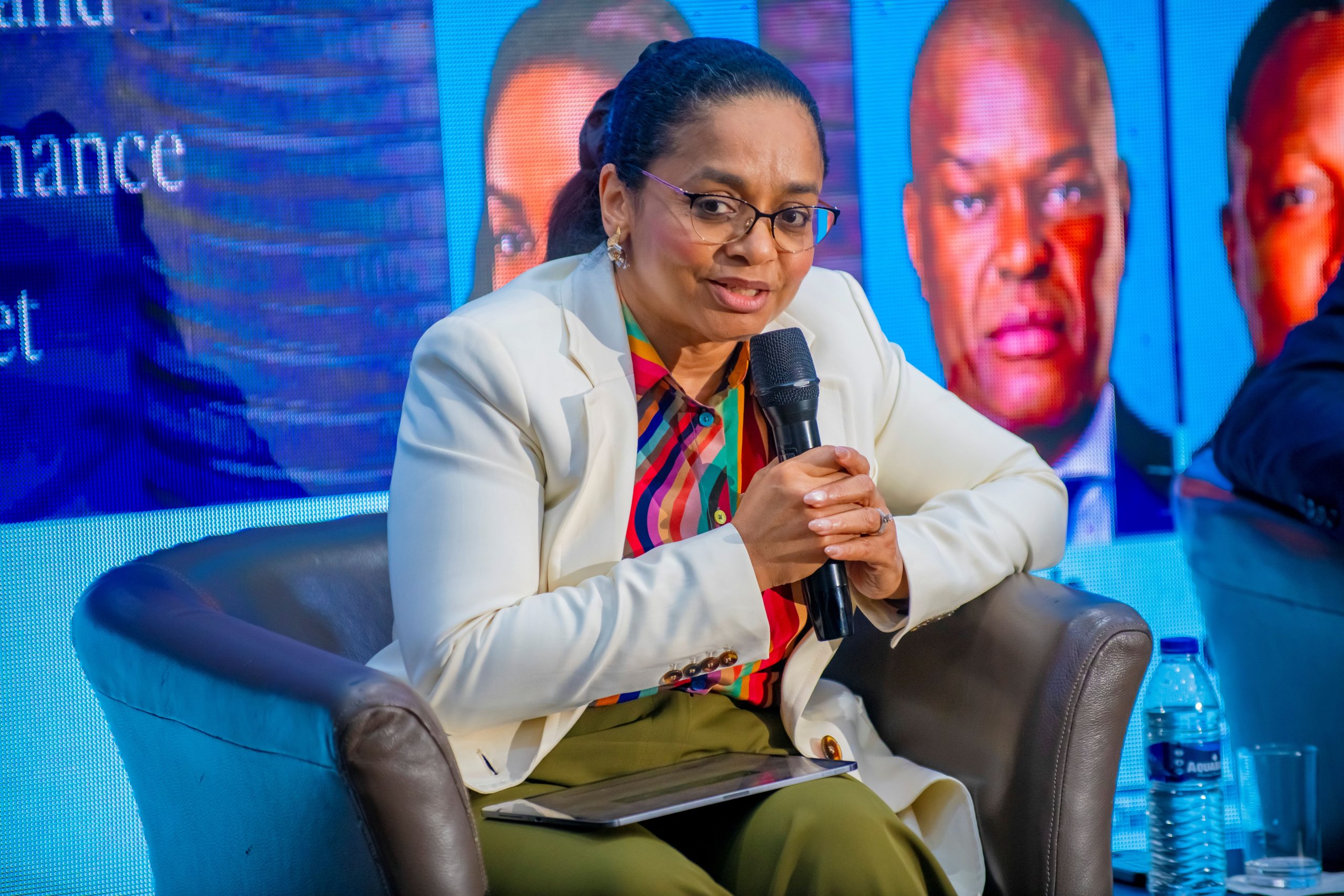

… CFO Eleanor Adaralegbe says corporate credibility, not just assets, attracts capital at Olaniwun Ajayi Roundtable
By Rashidat O. Okunlade
Seplat Energy Plc has underscored the critical role of transparency, strong corporate governance and stakeholder collaboration in unlocking structured financing opportunities and accelerating sustainable growth across Nigeria’s energy sector.
Speaking at the Olaniwun Ajayi Structured Finance Roundtable in Lagos recently, Seplat Energy’s Chief Financial Officer and Executive Director, Eleanor Adaralegbe, called on companies, particularly industry pioneers, to embrace openness and strong governance standards to build investor confidence and create pathways for successful financing transactions.
Adaralegbe made the remarks during a panel session themed, “From Theory to Transactions: Overcoming Barriers and Scaling Structured Finance in the Nigerian Market.”


Management Credibility as a Magnet for Capital
According to her, trust remains the foundation of every successful financing arrangement, and the reputation of a company’s leadership and governance framework plays a decisive role in attracting capital.
“I think one of the most fundamental things for the success of structured financing is the management team. The role of a management team is unbelievable. I’ve found in my journey with the company that this has been one area where a lot of people have invested in us because they believe in the management team,” she said.
She noted that beyond management credibility, Seplat Energy’s commitment to transparency and partnership has enabled the company to cultivate enduring relationships with financial institutions, regulators and investors.
“At Seplat, we work with financiers as partners. We don’t try to package a deal so that they can approve it. We work with them to ensure there’s a general understanding of what we’re trying to achieve, and we carry them along in our process,” she explained.
The Discipline of Dual Listing
Adaralegbe highlighted that Seplat Energy’s governance journey has been instrumental in shaping the company’s financing success story. Since its inception, the company has built a reputation for robust corporate governance, disciplined financial management and adherence to global reporting standards, positioning it as one of Africa’s most respected independent energy companies.
She further explained that Seplat’s dual listing on the Nigerian Exchange Limited (NGX) and the London Stock Exchange imposed stringent compliance obligations that strengthened the company’s institutional framework and enhanced investor confidence.
“The regulators and listing authorities helped shape us as a company because we had to meet listing requirements in both Nigeria and London. There was a discipline that we had to build into how we operated as a business, and that really helped us. Being listed in London was particularly beneficial because of the stringent governance and disclosure obligations that we had to comply with,” Adaralegbe stated.
“The quality of our governance, the strength of our management team and our willingness to engage openly with stakeholders have enabled us to build credibility in the market. Governance is not just a compliance exercise; it is a strategic enabler that gives investors and lenders confidence to support long-term growth,” she added.
She also commended the Securities and Exchange Commission (SEC) for fostering an enabling environment for innovation and capital formation.
“The SEC has been amazing with us because we engaged them, and they’ve done a lot of projects with us, enabling us to do many of the things we’ve accomplished over the years,” she added.
SEC Calls for Collaborative Market Development
The roundtable’s keynote address was delivered by the Director-General of the Securities and Exchange Commission, Dr. Emomotimi Agama, who emphasized the importance of collaboration among market participants in deepening Nigeria’s capital markets and expanding structured finance solutions.
He called on regulators, legal practitioners, issuers, investors and other stakeholders to work together to strengthen the ecosystem and unlock the full potential of structured financing as a catalyst for economic growth.
“We must work together. There is nothing wrong with our law firms identifying challenges in regulation and proposing ways to improve the regulatory framework. We must make this market better together because it is for the benefit of all of us,” Agama said.
He reiterated the SEC’s commitment to protecting investors while supporting market innovation, noting that a balanced regulatory framework would be essential to ensuring the continued growth and credibility of Nigeria’s structured finance market.
Why It Matters
In Nigeria’s capital-intensive energy sector, access to structured finance is often the dividing line between stagnation and expansion. Yet, as Seplat Energy’s CFO rightly noted, capital is not drawn merely to oil and gas assets; it is drawn to credibility.
The company’s emphasis on dual listing is particularly instructive. The London Stock Exchange’s stringent disclosure requirements are notoriously demanding, but Seplat’s leadership views them not as a burden, but as a catalyst for institutional discipline. That discipline manifested in transparent reporting, open engagement with financiers, and robust ESG architecture has allowed the company to raise significant capital in both debt and equity markets, even amid a challenging global economic climate.
This approach challenges a persistent misconception in the Nigerian business environment: the idea that governance is a bureaucratic formality. Adaralegbe’s assertion that governance is a “strategic enabler” underscores a fundamental truth investors and lenders do not simply fund ideas; they fund trust.
For the broader Nigerian market, the SEC’s call for collaboration is equally vital. Structured finance remains a complex, often opaque area of the capital markets. If Nigeria is to finance its massive infrastructure and energy deficits, the regulatory framework must evolve to support innovation while safeguarding investors. As Agama noted, law firms, regulators, and issuers must work as partners, not adversaries.
Seplat Energy’s story serves as a template. It demonstrates that when companies embrace transparency, regulators create enabling environments, and financiers are treated as partners rather than adversaries, the result is not just successful transactions, but a more resilient and globally competitive economy.
© ROTAMEDIANEWS Digital Newspaper | BusinessEcho Magazine
For advert placement, news tips and subscription enquiries, contact the Publisher/Editor-in-Chief, Rashidat Olushola Okunlade.
rotamedianews@gmail.com businessechomag@gmail.com
08082881578-08060575197